Sanitary Conditions

Sanitary Conditions

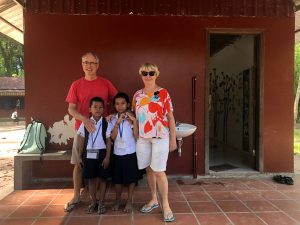
In 2020, the Bayon School would like to be even more proactive in helping the families of the primary pupils with their health and hygiene. As a result, the annual social visits of the families have been enriched with a health survey which will give us a more complete view of each individual situation and allow us to identify the priorities to be implemented in order to improve their sanitary conditions. Read on for details and the purpose of these visits, thanks to the account from Romain, our volunteer health advisor. Up until now, the association’s Health project has been reserved for the children, be it from the primary school, the Bakery school or the follow-ups in secondary school, and was organised around the annual medical visit by Jean-Pierre and MIchèle, our volunteer medical advisors. Based on their recommendations, those children who required treatment received dental and eye care thanks to partnerships with other health organisations. Any complex cases were registered and sent to the appropriate hospitals. The infirmary run by Jean-Pierre and Michèle during their visit was also very crowded. Last but not least, the hygiene kits were distributed every three months to all the pupils.

The Health team this year comprises Jean-Pierre, Michèle, Soky and me, volunteer for a year hoping to consolidate the health actions led by the Bayon School, and we are in the process of recruiting a school nurse.Our wish is now to reinforce, develop and, more importantly, open this Health project to the families. In order to achieve this target and to identify the priority areas for action, we decided to carry out a thorough analysis of the health and sanitary conditions in the families; we took advantage of the annual social visits to explore the theme of their health. The scope of the study was limited this time to the families of the primary school pupils.A survey was drafted by both the social and health teams, with a certain number of areas to be explored: housing, access to water, maternal health, medical history, role of local beliefs, health care and care centres, medical costs.


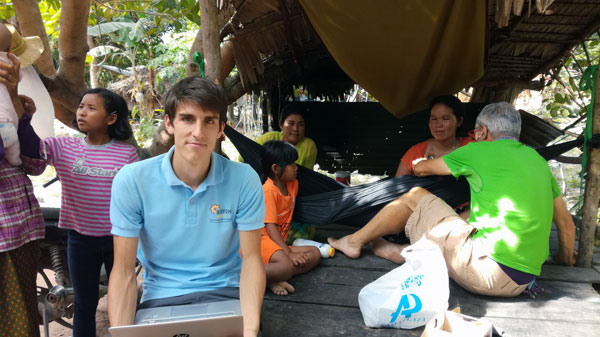
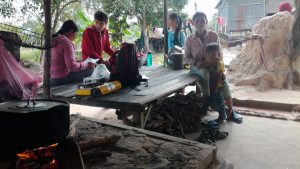
Between December 2019 and March 2020, each of the 162 families of the primary school received a visit which enabled us to understand their situation and discuss their individual issues with them. Each visit was carried out by Jean-Pierre, our doctor and one of the three Khmer social workers, Soky, Chhein or Srotom. The families all welcomed the survey: they spoke openly about their difficulties and are now waiting for the solutions that we are hoping to provide.

Both the answers received to the survey and the visual observations during the visits are important. The information collected is essential to give us a clearer idea of the sanitary conditions that the primary school pupils return to, once the school day is finished.

The conclusions of this survey will be summarised in a report mid-April, giving us a clear view of the current situation and the strategy we will need to implement to improve it.

In the meantime, the first results are already available with, on the one hand, a number of common problems:

• Access to drinking water and clean toilets is not widespread;
• There are many miscarriages and induced abortions;
• Addictions (alcohol and cigarettes) are a major problem;
• Dental problems are significant, as are the number of cases of untreated high blood pressure.
• Finally, medication is haphazard and irregular with a failure to seek treatment, which can be linked to education, cost or the family organisation; this merits extremely close medical follow-up.

On the other hand, certain medical issues are particularly complex and will require an individual solution.

Social issue

Bayon School’s origins go back more than 20 years. Since 2014, “Bayon Education and Development” is a Cambodian association which is supported by a French association called “SEP du Bayon”. We are committed to the education of children and students who live in precarious conditions; we currently support more than 400 young Cambodians from infant school right the way through to university or via a professional training programme in baking and pastry.

Behind this associative picture hides the story of 400 personalities, 400 different paths where each and every one of our students gives meaning to what we do. Let’s put the figures to one side and concentrate on the individual, take a step back from the school itself and go back into the field to get a sense of what is really going on, to understand. Understand what is happening in the life of these young people who live with very little, who move through life thanks to parents who fight or parents who sometimes give up that fight. Listen to them. Allow them to express themselves so that we can adapt our actions to what they need.

IMG_1048

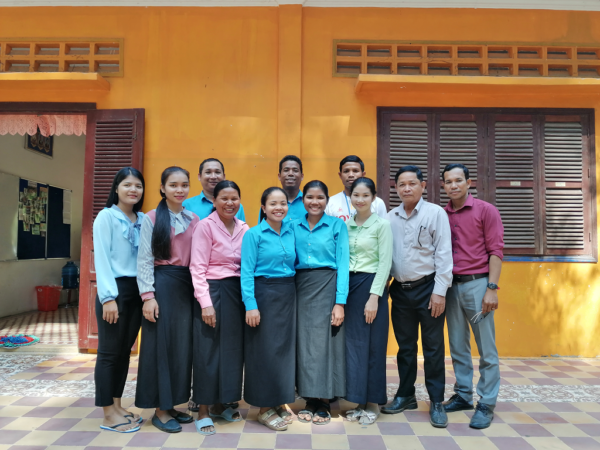
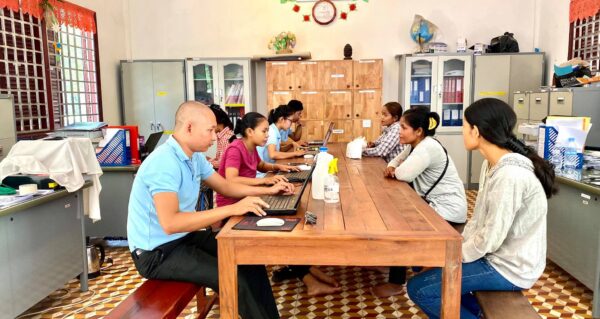
We took the decision to expand our social team which is now made up of four people: Thorth (Manager), Soky, Chhein and Srotom (social assistants).

This team selects the pupils once they are of age to enter primary school (one of the differences with the state schools), based on the following criteria: the family income, their living conditions, the number of working family members and dependent children, the amount of debt, their medical and sanitary conditions. This assessment gives rise to the attribution of social criteria levels: 1, 2 or 3 (1 being awarded to the most fragile families).

These same levels are used for the young people who make up the “Follow-Up” programme (students in middle school and then high school after having followed the primary school programme with Bayon) and for the recruitment of students for the Pastry School.
IMG_1042
Thanks to close monitoring and annual visits, our social team are able to assess any changes in our families’ situation.

At the end of 2019, it came to our attention that some of the families, who were benefitting from the “Follow-Up” programme, had seen their financial situation improve with higher income. We had to make some difficult, but necessary decisions, passing these families, who were previously Level 3, to a newly created Level 4. This change of level meant stopping financial aid for 15 students (12 families), whilst maintaining school and professional support.

As far as we at Bayon are concerned, this decision is, above all, good news, in the sense that the families have become more independent, better armed to face their daily challenges, freer. They give us hope for the future and allow us to help those families who really need it, with the hope that they, when the time comes, will also be able to set off on their own.

Our champions’ exploits

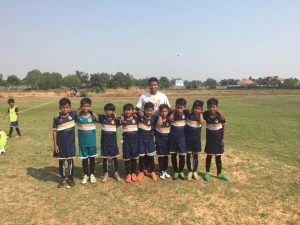
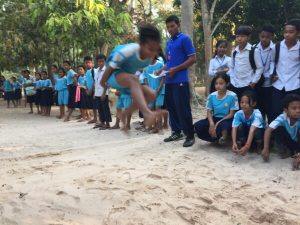
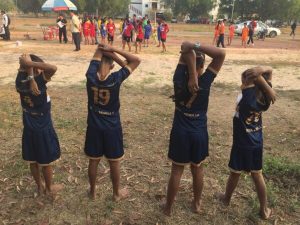
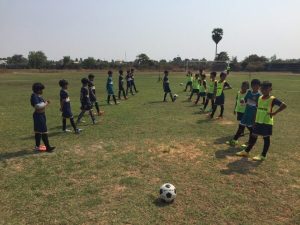
Set up in 2018, the sports programme at the Bayon Primary School has developed rapidly over the last two and a half years. Every week, our pupils practise different sports at school and participate in matches as well as an official regional school competition. Discover our champions’ exploits in pictures.


In February 2018, we decided to introduce weekly PE (Physical Education) lessons for the pupils from Grades 2-6 and recruited a qualified PE teacher; this was in line with our wish to offer a different pedagogical approach, based on the children’s individual needs (complimented by arts and crafts lessons) whilst expanding the traditional PE programme at the school. Since October 2018, we have extended the lessons to Grade 1 pupils. In order to continue to offer a high-quality PE programme, we also increased the number of hours in the weekly timetable 2019-20 from 40 minutes to one hour and 20 minutes.

Chuon Dorl is our qualified PE teacher, who followed a training program with the association Kampuchea Balopp, which promotes sport in Cambodia).

PE lessons are important as they allow our pupils to develop skills which are not always taught in the other subjects:

  • Team spirit
  • Self-confidence and the idea of surpassing oneself
  • Value of hard work and effort
  • Respect for others and compliance with the rules
  • A sense of initiative and responsibility
  • A senses of commitment.

These lessons are also the time for the children to let off steam and enjoy themselves whilst discovering different sports and fun activities.


At the beginning of the school year 2018, the primary pupils were all given a PE outfit of shorts and a T-Shirt, flocked with the logo of Bayon. These will be renewed in 2020. Furthermore, Bayon School has invested in the installation on the school premises of goalposts and a sand pit for athletics, as well as buying smaller items such as cones, bibs & balls.  Thanks to these investments, the children can now try out all sorts of sports: football, volleyball, long jump, high jump, running.

In 2019, Bayon School participated, for the first time in its history, in the regional school championship, which was organised by the Government for various different sports: football, basketball, volleyball & athletics. Bayon had football teams in the Boys, Girls and Mixed Teams competition.

In 2020, Bayon participated once again but with more children; 30 pupils overall took part, with the Boys’ football team and the mixed athletics team competing in the high jump, long jump, sprint, running, relay and a type of Pentathlon. Before the big event, our champions underwent specific training sessions and participated in two football matches against other primary schools, both of which they won.

In 2020, and for the second year running, our football team unfortunately did not manage to get past the first round, but we are not giving up and are already preparing next year’s competition with great enthusiasm. Our Athletics team, on the other hand, was more successful in their first participation with excellent results:

  • 1st Place in Boys Long Jump
  • 3rd Place in Girls’ Relay
  • 4th Place in Girls’ High Jump
  • 4th Place in Girls’ Sprint
  • 4th Place in Girls’ Running

The school championship is the only chance that many of our pupils have to participate in real competition conditions. It is most certainly a long-awaited event in the school calendar and they represent their school colours with tremendous pride. The popularity of the activities and the progression of the children in such a short time really underlines the importance of the sporting activities at the school and showcases its success.

For the school year 2020-21, Bayon School plans to continue investing in its sporting infrastructure, in particular a volleyball court, the renovation of the sand pit and the purchase of hurdles. In addition, we would like to register pupils in different sports in the school championship, giving more children the possibility to compete, the aim being of course to participate and have fun… whilst trying to bring home as many medals as possible!

New director for primary school

New director for primary school

Vantha HEM – On the right


In November 2019, after a rich and diverse career, Vantha HEM joined the Bayon School as headmaster for the Primary School and he has easily integrated the team. Read on to learn what motivates him and what he has been working on for the last 8 months.


Vantha, can you tell us briefly about yourself?

I am 42 years old and I have one child. I started my career as a school teacher before taking over as headmaster of the Ta Pen School (NGO Le Don du Chœur). I then worked for FRIENDS International as project manager for the reintegration of young dropouts before joining Water for Cambodia as deputy manager and head of operations.


What has struck you the most since arriving in Bayon School? And what do you appreciate the most since starting work here?

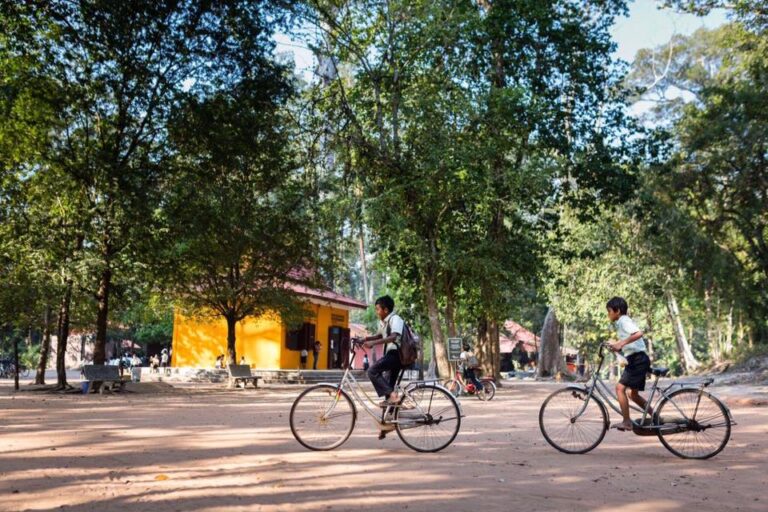
Its location! The school is located in a really exceptional place with all these gigantic trees. I have also been impressed by the fact that everything is given to the children to ensure that they can study in a good environment (canteen morning and midday, school supplies, uniform, …). I am touched by the atmosphere within the team of teachers and the solidarity between them. I also find that the pupils show great respect towards authority and the teachers. As a whole, the children are all quite honest.


What was the first thing you did?

For me, it seemed essential to get to know the children, their background and their families, in order to understand better the global project of the NGO. At the same time, I got in touch quickly with the local authorities (village chiefs, monks, …) to introduce myself. The school now participates once a month in an inter-school committee.


How do you perceive working with children who come from very poor backgrounds & whose families are very often unable to support them?

It is true that the pupils of the Bayon School are, for the most part, left to care for themselves. I worked for several years on the reintegration of young dropouts and so I make use of that experience as well as that of the current Bayon team. We work with a committee which summons the parents whose children miss too much school or who are no longer invested enough in the programme. It can be complicated to get the families to understand the importance of education. When the children fall behind and grow older (after Grade 6), it becomes delicate as they search for odd jobs to help support their family.


After eight months as headmaster of the Bayon Primary School, can you tell us about some of your achievements?

Firstly, some things have changed in human resources. Sothea has become the administrative manager and Loan the maintenance manager. Their roles are essential; I am training them and encouraging them to take on more responsibilities. The full team of teachers now takes part once a month in training programmes to help them with their teaching methods and the creation of their curricula; they are all very happy to participate. We have also implemented internal training with « school demonstrations ». Once a month, a teacher spends half a day in the class of a colleague to observe, pick up some good ideas and then introduce them in his/her own class.

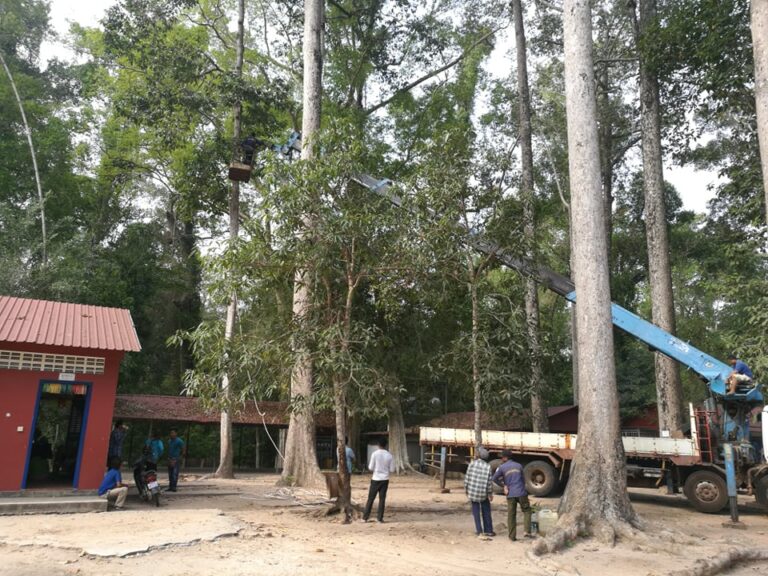
We have also worked on the school surroundings and safety. I have requested that the APSARA authorities cut down the dangerous branches of dead trees and we have planted several areas with flowers and plants.

Lastly, as I was saying at the beginning, I have been working on promoting good relations between the monks from the pagoda and our team members. We are on their land and it is indispensable that we work together to ensure the future of our school.


A last question: how do you manage to keep everybody motivated during the COVID-10 crisis?

At the beginning, we split the teachers into two groups to ensure social distancing. Some worked from home, whilst others came to the school to tidy up, decorate the classes and review the preparation of the lessons. Very early on, we set up distance learning for the pupils with work they could do at home. They come in groups of 5 at a time to pick up documents which they then bring back the following week. This system requires a great deal of organisation by the teachers. We are all hoping that we can reopen the school very soon.


Bayon school – Dealing with COVID-19

It has now been close to four months that COVID-19 has spread across the planet. Even if Cambodia has officially registered very few cases and no deaths, the country has not been spared and its population is suffering from the loss of jobs and the lack of tourist activity. Bayon School is doing their best to help the families during this unprecedented crisis.


Support the families – The first urgency

Since mid-March, no tourist has been allowed to enter the country and the large majority of the hotels, restaurants and spas have closed, leaving thousands of workers with no jobs and no compensation from the Cambodian government. Many of our families have been affected, losing their primary source of income which allowed them to meet the basic needs of 8-10 people. Furthermore, the children who used to go to school were being fed breakfast and lunch at the canteen, one thing less for the parents or grandparents to provide. Now they are at home and need feeding by their families, adding an additional charge.

Faced with this critical situation, Bayon School reacted quickly. From Week 1, all the vegetables grown by the famers invested in the Green Project were bought by the NGO and then distributed free of charge to the parents of our pupils. This guaranteed a salary for these women farmers and the insurance that the children would continue to eat healthy vegetables. In addition, our social teams studied the families very closely and we started distributing rice to those in desperate need from the second week after the school closure. Special thanks to our donors and the company AMRU Rice for their precious support, which allowed us to finance the rice and vegetables.

Closure of the Pastry School and Coffee Shop – What happens next?

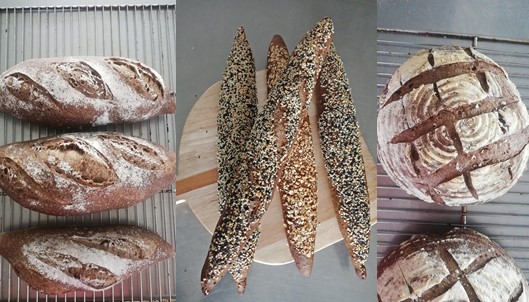
At the Pastry School, we had to send our 26 students back to their families and, as a result and out of obligation, close the shop. The Coffee Shop of the Bayon Pastry School, opened more than 4 years ago, covers 50 % of the budget required for the pastry/baking training programme. Its closure means a significant loss of income for the NGO, which we have been able, in part, to compensate through the generosity of our donors. After two weeks of adjustment and holidays for the catering staff, we put in place several projects in preparation for the re-opening: inventory, storage, planting in the gardens, painting the walls, Spring cleaning, … In the end, the team was very busy. In addition, Sokhouern and Sokly developed a brand-new range of bread with no fewer than 10 new references for sale in our future bakery. They had the time to test new recipes to ensure a wide range of products that we will be able to offer the hotels and restaurants once they can re-open. Finally, since the end of April, the teachers have put in place online lessons for our students, who, each day, receive videos and telephone calls to keep them up to date and help them revise their lessons.

Social follow-up, survey and report

Our social teams have been very committed during this period. They worked firstly on identifying the families with the most difficulties in order to help them in the best way possible. This crisis has also given us the possibility to take a big step back and analyse the impact of our actions on the children and their education. A further study was led with the alumni of the Pastry School, with the aim of updating the details of our former students, analyzing their career paths and reviewing their situation one to five years after graduating.

And our communication?

We have launched the huge undertaking of redoing the website for Bayon School. It will be revealed soon! And we are trying, as best we can, to stay in touch with all the friends of Bayon School, who, we know, stand by our side. An enormous thank you for your help which has allowed us to manage this crisis and help our families as much as possible. We hope to reopen the schools very soon and see again the happy, smiling faces of our pupils as they play outside.

Secret Link