New Programme on Agroecology

New Programme on Agroecology

After launching our Green Project at the beginning of 2018, we would like to go further with our mission of sustainable nutrition and develop our professional training programme. This is why we have taken the decision to launch a new programme on agroecology in November 2020. Let’s take a closer look at what this would involve, as well as the short- and medium-term objectives of this innovative project which is a real investment for the future.

Cambodia’s population is essentially rural (76,6% in 2018), with one third of its inhabitants trying to survive with less that 1$ a day; the country is now facing the same problems European agriculture has been facing since the end of the last century.

The conventional, intensive farming that is currently being practised in Cambodia uses many chemical inputs. With the predominance of rice monoculture, the country is obliged to import the large majority of its vegetable produce (estimated at 80%). The combination of monoculture and extensive use of pesticides prevents the regeneration of the soil, causing a drop in the yields of agriculture production.

Today, there are few actors in Cambodia offering concrete solutions to these issues, such as awareness campaigns and training of the population in sustainable, environmentally friendly farming. At the Bayon School, we feel that transmitting the principles in agroecology could be a long-term solution.

Agroecology is based on applying ecological concepts and principles to optimize interactions between plants, animals, humans and the environment, while taking into consideration the social aspects that need to be addressed for a sustainable and fair food system ((source FAO.org). It is based primarily on enhancing biodiversity, waste recycling and crop rotation, making it possible to diversify crop production and remove the need for chemical input.
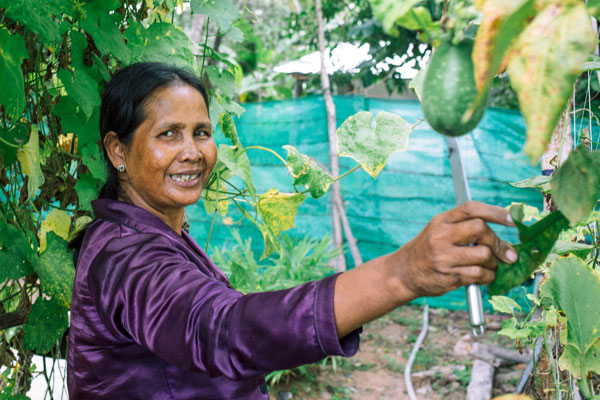
Since 2018, the Bayon School has been running a sustainable agricultural project by training some of the families of our pupils in agroecology. By planting vegetable gardens on their plots, they are now able to bring in extra income by supplying the canteen at the primary school with locally grown, pesticide-free vegetables.
This project is currently improving the living conditions of 11 families of the primary school, as they produce close to 30 kg of vegetables each day.

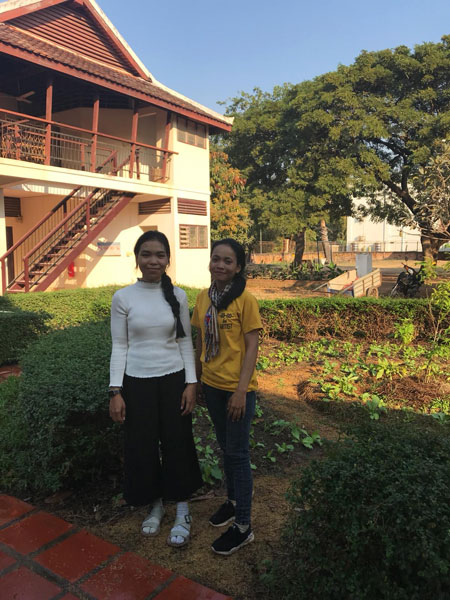
In order to go further in our mission of raising awareness and educating, we would like to create a new professional training programme in agroecology. We are currently working on setting up this school with the association Vivre de sa Terre, which already has some experience in agro-ecological professional training in Battambang. Vivre de sa Terre is helping us create the pedagogical content of our programme as well as training our future teachers, En and Sreyleak, who are currently learning how to improve their teaching skills and learning techniques, management and entrepreneurship, sales, marketing and accounting.
After studyingclosely the training experience of Vivre de sa Terre, we have decided to create a short, one-year programme, including several months of internship, the aim of this programme being to allow our students to be rapidly employable. We would like to open this new programme to 10 youths aged 17-20 years living in and around Siem Reap. The programme will allow us to train agro-ecological technicians, who would also be capable of creating projects and putting into practise the values of sustainable development in their future careers.

The teaching content of the programme will need to meet these two criteria, which are essential to the success of the project. In the space of one year, our future students will have gained both technical skills (how to restore the soil’s fertility, protect crops, transform and recycle production, etc.) as well as entrepreneurial know-how (communication, sales and income management, how to work together and innovate, development of soft skills, etc.).

Our medium- and long-term ambition is to promote awareness and the value of more responsible farming practises in Cambodia. To achieve this goal, our first intake of students will need to become the ambassadors of agroecology in Cambodia, where the market for organic produce is still a niche market just waiting to develop. It is a real investment for the future.

Coffee Shop : self-finance

Bayon Pastry School was created in 2014. Our first intake was composed of ten young women, all from underprivileged backgrounds in Siem Reap province. As the first year of our training ended successfully, it seemed essential to increase our capacity to make it accessible to a greater number of young women and families in need. The idea was to make this vocational training sustainable.

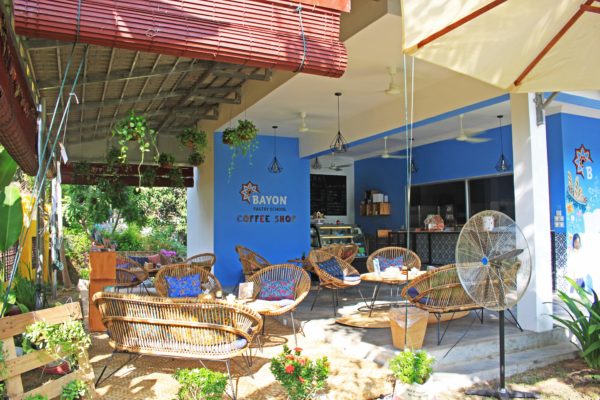
In 2015, Bayon Pastry School’s Coffee Shop opened its doors. The objective was to self-finance a part of our pastry vocational training. Pastries, viennoiseries and all kinds of breads are produced every day. The recipes are carefully elaborated by our Khmer chef Sokhoeurn Morn, also pastry school director. Her creations are then cooked by the production team mainly composed of former students of the school.The students, on the other hand, receive daily instruction in our two lab: pastry and bakery. They also learn, through the coffee shop, the basics of waitressing. Since its opening, the coffee shop has grown steadily and can now accommodate 30 people. It is now one of the most famous coffee place in Siem Reap city for its pastries but above all, for its quiet environment. This “corner of heaven” is sheltered from the hubbub of Siem Reap and its famous noisy “pub street”. To allow a good service, the coffee shop now counts 3 waitresses and 3 young girls work in the kitchen.

The pastry school also receives orders from restaurants, hotels and spas of Siem Reap. With a dozen regular customers, we are currently able to deliver different varieties of breads and pastries every day across the city. Among them are Bodia Spa, hotels Mémoire, Maison Polanka or even Sala Lodges and restaurants Bakong, Georges Rhumerie or Le Bel Air.
In summary, from 3 years, the coffee shop sales has been enabling us to self-finance 47% of the budget of the pastry school. This last year 2018/2019, we even reached a rate of more than 50% of contribution. And 23 students benefit from our baking and pastry training for free thanks to the Coffee Shop incomes!

Another great way to get involved with our association, another way of giving : a good cake for a good cause !

Bayon school – Dealing with COVID-19

It has now been close to four months that COVID-19 has spread across the planet. Even if Cambodia has officially registered very few cases and no deaths, the country has not been spared and its population is suffering from the loss of jobs and the lack of tourist activity. Bayon School is doing their best to help the families during this unprecedented crisis.


Support the families – The first urgency

Since mid-March, no tourist has been allowed to enter the country and the large majority of the hotels, restaurants and spas have closed, leaving thousands of workers with no jobs and no compensation from the Cambodian government. Many of our families have been affected, losing their primary source of income which allowed them to meet the basic needs of 8-10 people. Furthermore, the children who used to go to school were being fed breakfast and lunch at the canteen, one thing less for the parents or grandparents to provide. Now they are at home and need feeding by their families, adding an additional charge.

Faced with this critical situation, Bayon School reacted quickly. From Week 1, all the vegetables grown by the famers invested in the Green Project were bought by the NGO and then distributed free of charge to the parents of our pupils. This guaranteed a salary for these women farmers and the insurance that the children would continue to eat healthy vegetables. In addition, our social teams studied the families very closely and we started distributing rice to those in desperate need from the second week after the school closure. Special thanks to our donors and the company AMRU Rice for their precious support, which allowed us to finance the rice and vegetables.

Closure of the Pastry School and Coffee Shop – What happens next?

At the Pastry School, we had to send our 26 students back to their families and, as a result and out of obligation, close the shop. The Coffee Shop of the Bayon Pastry School, opened more than 4 years ago, covers 50 % of the budget required for the pastry/baking training programme. Its closure means a significant loss of income for the NGO, which we have been able, in part, to compensate through the generosity of our donors. After two weeks of adjustment and holidays for the catering staff, we put in place several projects in preparation for the re-opening: inventory, storage, planting in the gardens, painting the walls, Spring cleaning, … In the end, the team was very busy. In addition, Sokhouern and Sokly developed a brand-new range of bread with no fewer than 10 new references for sale in our future bakery. They had the time to test new recipes to ensure a wide range of products that we will be able to offer the hotels and restaurants once they can re-open. Finally, since the end of April, the teachers have put in place online lessons for our students, who, each day, receive videos and telephone calls to keep them up to date and help them revise their lessons.

Social follow-up, survey and report

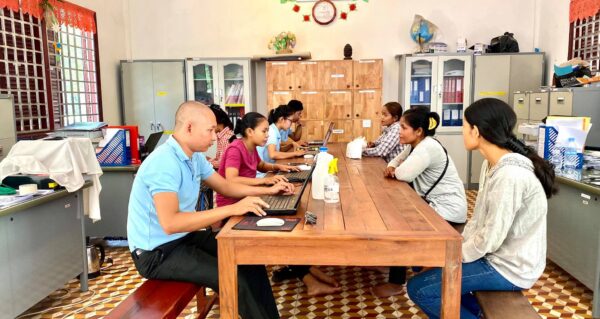
Our social teams have been very committed during this period. They worked firstly on identifying the families with the most difficulties in order to help them in the best way possible. This crisis has also given us the possibility to take a big step back and analyse the impact of our actions on the children and their education. A further study was led with the alumni of the Pastry School, with the aim of updating the details of our former students, analyzing their career paths and reviewing their situation one to five years after graduating.

And our communication?

We have launched the huge undertaking of redoing the website for Bayon School. It will be revealed soon! And we are trying, as best we can, to stay in touch with all the friends of Bayon School, who, we know, stand by our side. An enormous thank you for your help which has allowed us to manage this crisis and help our families as much as possible. We hope to reopen the schools very soon and see again the happy, smiling faces of our pupils as they play outside.

Professionnal Training – Where are our former students?

Between 2014 and 2019, our Pastry school has seen 5 intakes of students and 80 young women have graduated from our professional training programme. What have they become? Let’s take a look at their different paths and their current situation in a Cambodia which is booming, but where there are still many disparities..


The Survey

The Bayon social team carried out a survey early 2020 on 80 alumni with the following aims:

  1. Analysing the impact of the pastry/baking training in the employability of the young women
  2. Noting their personal satisfaction in their current job
  3. Understanding the level of income that they earn in order to live a decent life.

Out of 80 alumni, 65 took part in the survey (by telephone or via an online form), which represents 81% of our former students.


Here are some key figures:

  1. 86% of the students questioned are currently in employment with 14% not working (unemployed, maternity leave or further studies at university). Three quarters of them work in Siem Reap.
  2. The average wage for our former students, across the five different intakes, is $190 per month.
  3. None of those surveyed plans to change jobs and 9 out of 10 are fully satisfied with the skills acquired during the training programme in Bayon Pastry School. They have also confirmed that these skills are extremely useful on a day-to-day basis.

82% of the former students surveyed are currently working in the hotel & restaurant sector and so are using the skills they acquired in Bayon daily.


A reasonable wage in Cambodia.

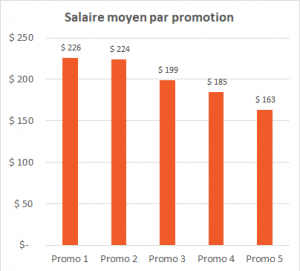
Although Cambodia introduced a legal minimum wage of $170 (for the textile sector) in January 2018, a large majority of the population does not earn that amount. The students who graduate from the Bayon Pastry School are generally recruited at an average wage of $163 for the first year. This wage increases quite quickly and they can earn up to 15% more in their second year.

The average wage of the graduates surveyed is 190 $/month (excluding those who are not currently working). We can see a clear link between the years of experience and the salaries which increase by 40% over 5 years. When asked “Can you live comfortably and without extra help on your salary?”, 3% (2 graduates) confirmed that they were living comfortably and 89% thought that they were just scraping by.


Meeting their own needs and supporting their families.

The data above illustrates how precarious the situation is for the families of our graduates: many have debts to pay back and as soon as a member of the family can meet his/her own needs with a regular wage, he/her must support the family. Of the 65 alumni questioned, 61 indicated that they were sending money back to their family each month. The amounts for 75% of them varied from $50 to 150$ per month; in other words, up to half of their wage.

KOLA – Former student, training a new student at her new job.


The Role of Bayon School.

Our role is to train young women for a practical profession which will allow them to access the workplace quickly, where they can earn a decent, sustainable wage. For most of them, a large chunk of this salary will be sent to their family, which gives our young graduates the impression that they are just scraping by. However, we do need to remind them that our training programme is relatively new, but that the salaries do increase over the years with experience: +40% over 5 years. Most importantly, we need to remind them that it is the whole family which is better off; brothers and sisters who can go to school, grandparents who can get medical treatment and women who can be proud of having brought about this change.


PARTNERSHIP WITH PSE

PARTNERSHIP WITH PSE

PARTNERSHIP WITH PSE ASSOCIATION

As presented and voted at the AGM in Paris, June 2019, the partnership project between Bayon School and PSE is now underway.

WHY THIS PARTNERSHIP ?

Since its beginning 20 years ago, the Bayon School has made tremendous progress, recruiting many talented people, achieving well-deserved success & continually launching new initiatives. It is still hugely rewarding to participate actively in the education of so many underprivileged children from Siem Reap, from signing them up for their primary school years and following them through their secondary years, to developing the Pastry School & Coffee Shop and now by providing the necessary know-how to help families participate in the Green Project.
However, at the same time, we have made some observations;
With the primary school located within the temples, we are no longer able to expand. This forces us to make very difficult decisions when selecting new pupils as we cannot satisfy all the requests, of which there are far too many. Furthermore, our primary school pupils from twenty years ago are now grown-up; we have supported them throughout their studies, but many of them are now looking for jobs. Finally, whilst our “small is beautiful” set-up allows us to be creative, flexible and reactive as well as “entrepreneurial”, it also suffers from the fragility of a small structure.
With all this in mind, we set out on a search for a partner, who would allow us to keep our values, our DNA, our “footwork”, but who would also open doors to new initiatives and professional opportunities for the children, giving the Bayon School long term security, from both an organisational and a societal point of view.

Deux femmes posent pour une photo

PSE “Pour un Sourire d’Enfant”, (For a Child’s Smile) an association set up in 1996 by Christian and Marie-France des Pallières, quickly emerged as the ideal association for this partnership.
PSE is a charity registered in Cambodia where it currently takes care of over 6500 children and their families through financial support. PSE also has a number of vocational schools where students can learn a skilled trade in hospitality, management or sales & technical.

PSE has developed its activities mainly in Phnom Penh with some branches outside the capital, but the association has also been overwhelmed by its success and is now facing some challenges with its local branches.

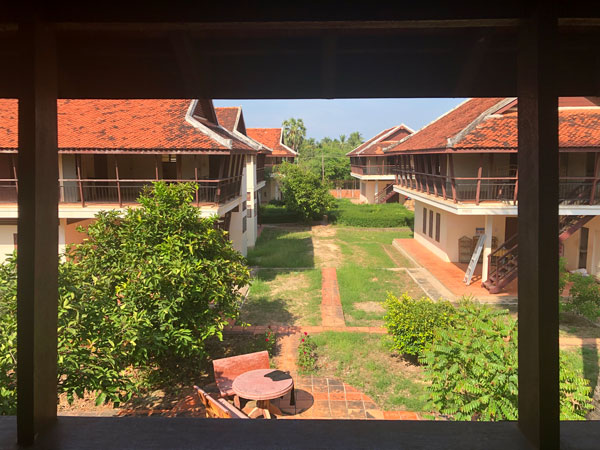
Deux maisons et un jardin

In the Siem Reap branch, where there are around 10 full-time employees (social team and operational support), PSE currently helps 414 children who are enrolled in local state schools and accompanies 200 families with financial support. It also has a “reception centre” with various buildings on a large plot of land close to the town centre, but this is not currently being optimised, Under the terms of our agreement, the Bayon School will take on the management of these activities in Siem Reap through synergies of both associative models and the local teams.

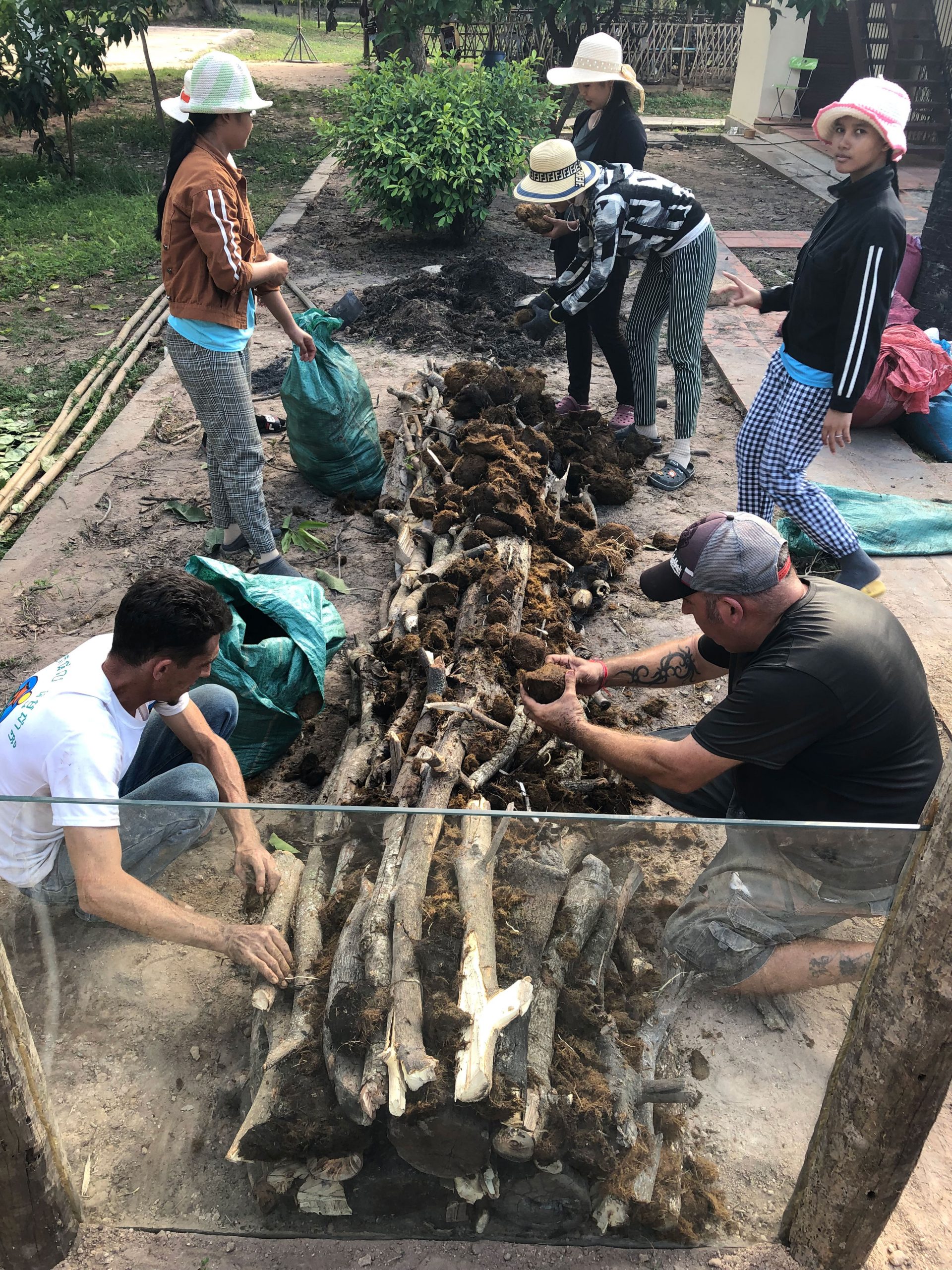
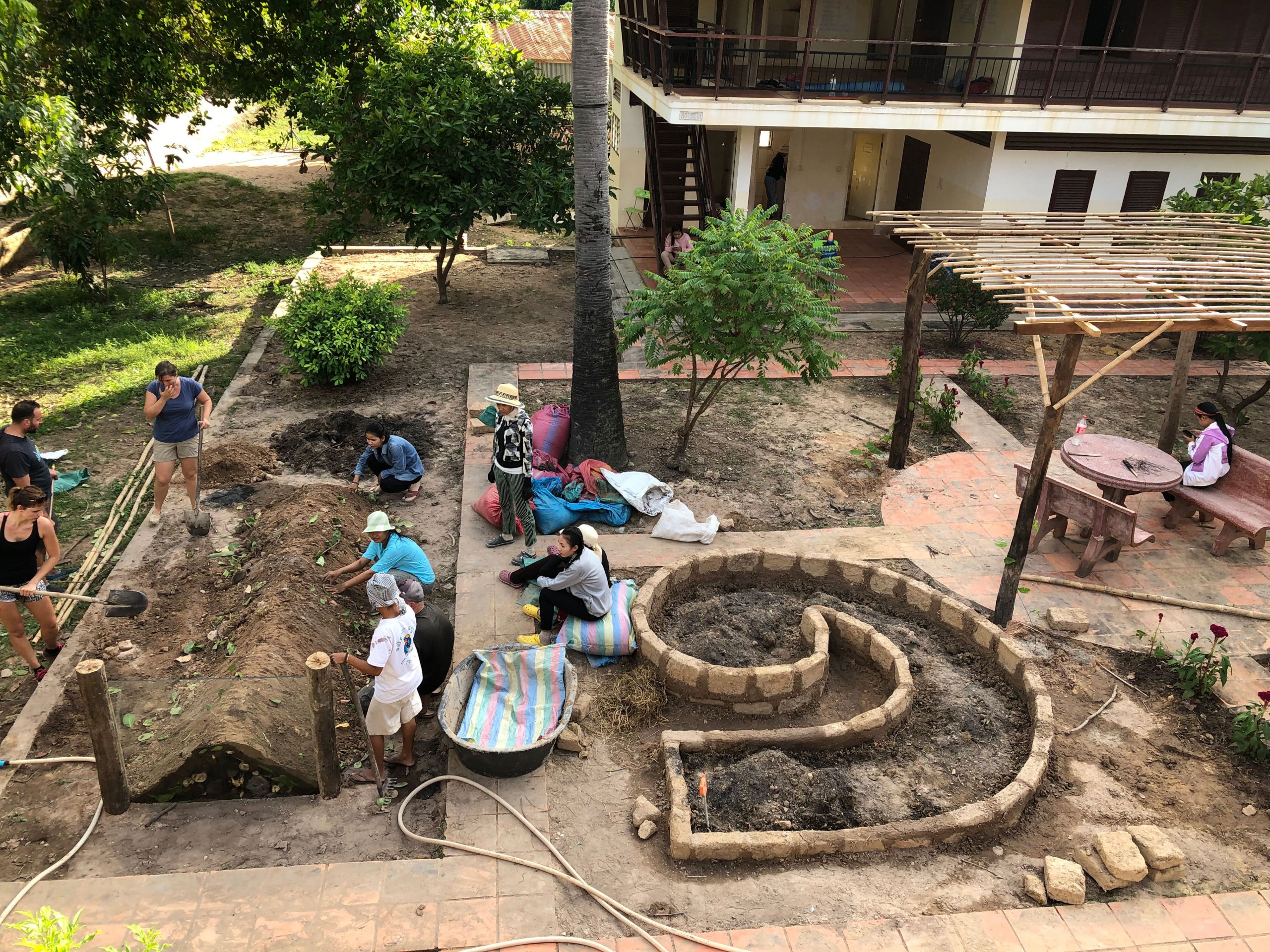
Right now, the first project on this plot will be the setting up of an experimental farm of permaculture – or “integrated agriculture” – which will be the basis of a future vocational training programme. More news and photos of this project in the next newsletter!

Des gens travaillent dans un jardin

Des travaux pour aménager un jardin potager


New work space at pastry school

New work space at pastry school

The Bayon Pastry School has begun its sixth school year with a new intake of 26 students. The site has been transformed from its modest beginnings and the training programme is now highly professional and well known in and around Siem Reap.

Our experience has led to a growing reputation and our students find jobs easily once they have finished the programme. Over the last 5 years, 86 students have graduated and found stable jobs.

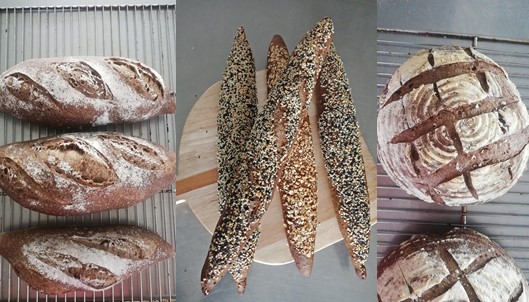
What’s next? We want to grow and improve our training site as well as the quality of our bread. Our students are trained mainly in pastry but we want to develop our bread-making programme. With this in mind, we have decided to create a new baking laboratory for use by our students.
WEB-IMG_0987

Let’s find out more from Sokhoeurn, the head of the Pastry school:

What are the objectives of this new work space?
The main objective is to extend our premises to allow us to recruit more than 25 students per intake. In addition, up until now, we have concentrated on pastry and the equipment we use is not particularly adapted to bread-making. We would therefore like to invest in more specialised equipment for this new programme.

What has changed compared to the old pastry lab?
Apart from giving us more space, the major improvement has been made in reaching required standards of hygiene. With this new work space, we will be able to operate in compliance with international standards of hygiene and food safety.
WEB-IMG-1805
Have you invested in specific equipment?
We have invested in the small equipment which Is essential for break-making, as well as a dough-making machine, spiral mixers and an oven. I am particularly proud of the investment in the cold storage room which will enable us to manage our stock better. These recommendations were made by Lesaffre and Arizta, our partners on this project.

What are your projects for the future?
We would like to improve the quality of our bread and then promote it in Siem Reap. We want our students to realise how important bread is; they need to understand that it is the equivalent of the rice that we eat with every meal in Cambodia!

A very big thank you to all our sponsors, this project could not exist without your loyal support : Aryzta, Fondation Sodebo, Lesaffre, Kitchen Aid ; and not forgetting severals donators who gave in honor of Irene Meister.
WEB-IMG_20191209_164149

Secret Link